
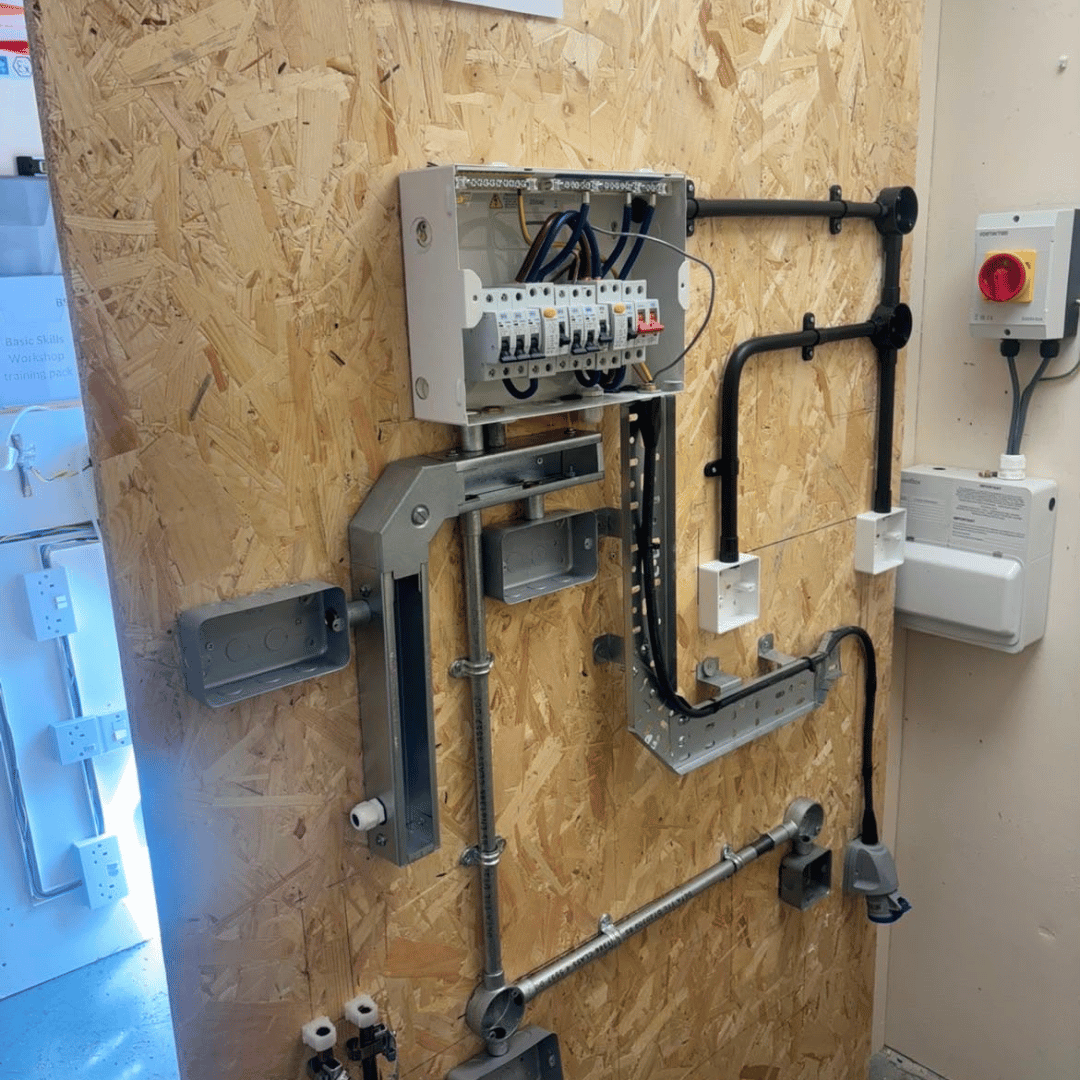
It’s one of the most common questions facilities managers and commercial landlords ask — and the honest answer is that there’s no single number that applies to every building. Here’s what UK regulations actually say, how inspection frequency is really decided, and what it means for your property.
The Short Answer: It Depends on Risk, Not a Fixed Rule
Commercial electrical inspections — formally known as an Electrical Installation Condition Report, or EICR — are governed by BS 7671, the IET Wiring Regulations. BS 7671 doesn’t set one mandatory interval for every commercial building. Instead, it expects the person responsible for the premises to ensure inspections happen at intervals appropriate to the risk of that specific installation.
That said, a general five-year cycle is the widely used starting point for most standard commercial properties — offices, shops, and similar lower-risk environments. But “five years” is a guideline, not a guarantee, and several factors can shorten that interval considerably.
What Actually Determines the Right Interval
Type of Property and How It’s Used
A quiet office with light electrical use carries a very different risk profile to an industrial unit, a commercial kitchen, or a building with heavy machinery. Higher-usage or higher-risk environments typically need more frequent inspection — sometimes annually — regardless of what a generic guideline suggests.
Age and Condition of the Installation
Older wiring, previous repair history, and any past EICR findings all factor into what interval makes sense. A newer, well-maintained installation may comfortably reach the five-year mark; an ageing one with a history of C2 or C3 observations often shouldn’t.
The Inspecting Electrician’s Recommendation
When an EICR is completed, the electrician sets a recommended retest date based on what they actually find on site — not a generic default. This is one of the most important parts of the report, and it should be treated as the real guide going forward, not the five-year figure alone.
Insurer and Contractual Requirements
Many commercial insurance policies specify their own inspection requirements, and these can be stricter than the general BS 7671 guidance. It’s worth checking your policy directly rather than assuming the standard interval applies.
Why This Isn’t Just a Compliance Formality
An EICR is a genuine safety assessment, not paperwork to file away. It identifies developing faults before they cause disruption, equipment damage, or worse — and it gives facilities managers a documented, defensible record that electrical safety is being actively managed, which matters for insurance claims, audits, and lease negotiations alike.
This is the same logic behind treating electrical inspection as part of a wider planned preventative maintenance approach rather than a one-off event — catching issues on a schedule is consistently cheaper and safer than reacting once something has already failed.
What an Unsatisfactory Report Means
If an EICR comes back with C1 or C2 observations, the report is classed as unsatisfactory, meaning a dangerous or potentially dangerous condition has been identified and needs addressing without delay. A C3 observation is less urgent — an improvement recommendation rather than an immediate risk — but should still be factored into ongoing maintenance planning rather than ignored until the next inspection.
Building a Sensible Inspection Routine
For most commercial landlords and facilities managers, a practical approach looks like this:
- Start with the standard five-year benchmark as a baseline, not a fixed rule
- Adjust based on property type and usage — higher-risk environments need shorter intervals
- Follow the electrician’s recommended retest date on every report, not just the general guideline
- Check insurance requirements separately, as they may be stricter
- Address C1/C2 findings immediately, and plan for C3 findings within ongoing maintenance
Getting a Clear, Accurate Assessment
The right inspection interval for your building isn’t something to guess at — it should come from a competent electrician who actually assesses your installation, your usage, and your risk profile.
Our electrical services and EICR testing are built around exactly this kind of honest, risk-based assessment — not a one-size-fits-all schedule. If you’re not sure when your commercial property is actually due for inspection, get in touch with the Lime Construction team for a straightforward review, or browse more compliance and safety guidance from our team.